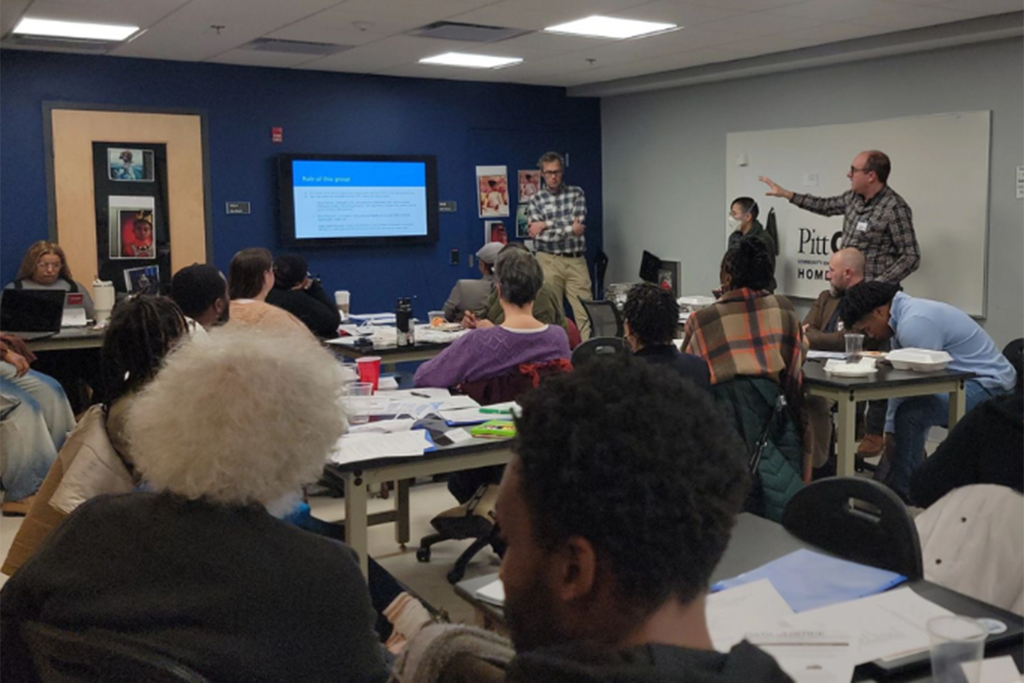
On a bright and inspiring afternoon, the Black Equity Coalition (BEC) launched its inaugural Community Data Justice Collaborative (CDJC) Workshop at the Homewood Community Engagement Center (CEC).
Data Justice for Pittsburgh’s Black Neighborhoods is a project led by the Black Equity Coalition (BEC), in partnership with the City of Pittsburgh, that aims to build decision-making power for Black residents. This project engages with those that have been impacted by residential segregation and disinvestment, by creating public processes and power over data as it is used, governed, and disseminated in the City of Pittsburgh.
Pittsburgh is one of four U.S. cities selected for the Modern Anti-Racist Data Ecosystems (MADE) for Health Justice initiative, sponsored by the de Beaumont Foundation. The initiative supports the development of equitable, health-focused data systems. Through this effort, the BEC collaborates with the Community Data Justice Collaborative — a group of residents participating in data-related decisions that shape city policies and technology use.
Together, the BEC and city data stewards engage in participatory activities to develop a more just and transparent data governance framework. The session sparked meaningful conversations about how community members can engage with data to reimagine and influence the systems that impact health and shape their daily lives.
The workshop kicked off with an activity designed to have participants reflect on the services that the City provides, and the ways that they might show up in data about them. Participants talked with others at their tables about the range of city programs and processes they encounter in their day-to-day lives, including transportation, public safety, parks, property regulation, and maintenance. They then discussed the types of data the city might collect in providing these services, and discussed how this information could be better used to serve their communities.
Following this interactive activity, attendees gained valuable insights during a presentation on the role of the CDJC:
- Tiffany Gary-Webb shared some background information on the Black Equity Coalition’s mission and its ongoing work.
- Bob Gradeck introduced the larger Data Justice Project, emphasizing the importance of equitable data use to address systemic inequities.
- Chris Belasco, Chief Data Officer at the City of Pittsburgh described the data governance process at the City and the involvement that CDJC members can have in making decisions about data.
- Heidi Norman, the Chief Information Officer and Director of the City of Pittsburgh’s Department of Innovation and Performance (I&P) shared closin remarks, reinforcing the importance of collaboration between community members and city officials.
Members of the Collaborative then had the chance to ask questions about their role in the effort and type of impact they could have.
- They were interested in changing practices of data collection and data use that were restorative. Too often, data has been used to stigmatize and traumatize communities and the people connected to them.
- People are wary of data collection efforts, and want to better-understand and have influence over how their personal information is used by the City, especially for issues around policing and EMS.
- Participants had a desire to fill the gap between what data the city collects and uses and their own interests. They mentioned their challenges around environmental management and the process of acquiring vacant and City-owned property.
- They were curious about and interested in influencing the City’s data governance practices and wanted to learn more about how data accuracy and validity are assessed.
- There was also desire among participants to learn more about how data was used to frame issues important to them and their communities. This interest ranged from policies and analysis to the use of data visualization tools.
- Collaborative members also started an important conversation about how to hold the City accountable around recommendations made through the project. This will be a theme we’ll cover in upcoming activities.
- Members of the Collaborative also expressed a strong interest in connecting with each other and learning more about data justice principles. This first workshop laid the foundation for ongoing conversations and action around data justice.
By centering community voices and fostering collaboration, the CDJC aims to help residents advocate for equitable data practices and systemic change. Stay tuned to learn about future workshops and other opportunities to co-create a just and equitable Pittsburgh with us at:www.BlackEquityCoalition.org