On February 3rd members of the NPP dodged icy sidewalks and piles of snow to come together at Steel City Squash to discuss the topic of vacant and abandoned property.
The impact of vacant property on mental health and safety
To kick off the meeting as we usually do, we asked community members to talk about how the topic of discussion in that meeting impacts their health and well-being. They shared their insights about how these vacancies effect their Social Determinants of Health:
- It makes them feel sad and depressed when they see once vibrant spaces empty and abandoned.
- Stigma about living in a community that has experienced disinvestment is palpable.
- Vermin, disease, and pollution associated with vacant land and property impacts their health.
- A concentration of vacant property in an area causes them to worry about their safety.
- Vacant property is associated with lower property values and a loss of equity, and homeowners feel like vacant property is connected to a wealth gap.
Vacancy Statistics: A Data Driven Overview
Mackenzie Pleskovic and Christian Umbach of the City Planning Department at the City of Pittsburgh then shared some statistics about vacant property in the City and in Larimer.
Citywide, there are approximately 30,000 vacant parcels (without a structure), and these can include former residential and commercial lots, and wooded hillsides. The city owns about one in three vacant properties in Pittsburgh.
In Larimer, there are 864 vacant properties, accounting for 55% of properties in the neighborhood, with an additional 61 condemned structures.
One of the challenges the City faces in addressing vacant property in the neighborhood involves finding someone who can put vacant property to a productive use. Many of the private entities that own vacant properties in Larimer are not paying real estate taxes on those properties.
Vacant property costs the city a considerable amount of revenue and imposes costs for property maintenance. The City spends $2 million per year to provide code enforcement, police, and fire services to vacant property. The fact that vacant properties reduce the value of land around them also results in an estimated $4.8 million in lost property tax revenue in the City.
Solutions for Abandoned Land: From Greenways to Adopt-A-Lot
After talking about the current state of affairs, our presenters shared how programs in Philadelphia and Flint Michigan were able to improve health outcomes and enhance safety by addressing vacant property.
They also shared how the City used data to identify 3,000 parcels that could be added to expanded greenways, including properties in Larimer near Negley Run and Washington Boulevard; doing so, the health of the community would benefit through reduced flooding and landslides, minimized heat island effects, and enhanced recreational opportunities.
They also talked about the City’s Adopt-a-Lot and Vacant Structure Stabilization programs, and how they are designed to improve health and well-being by addressing issues of vacant and abandoned property.
They also highlighted how residents can request soil tests through the Allegheny County Conservation District and use the 311 response line to report issues with vacant property, including weeds, dumping, and building maintenance.
Our presenters stressed that the best way to take action is working together through the Larimer Consensus Group, who is working with the City to implement the 2023 Community plan.
Sketching Larimer’s Future
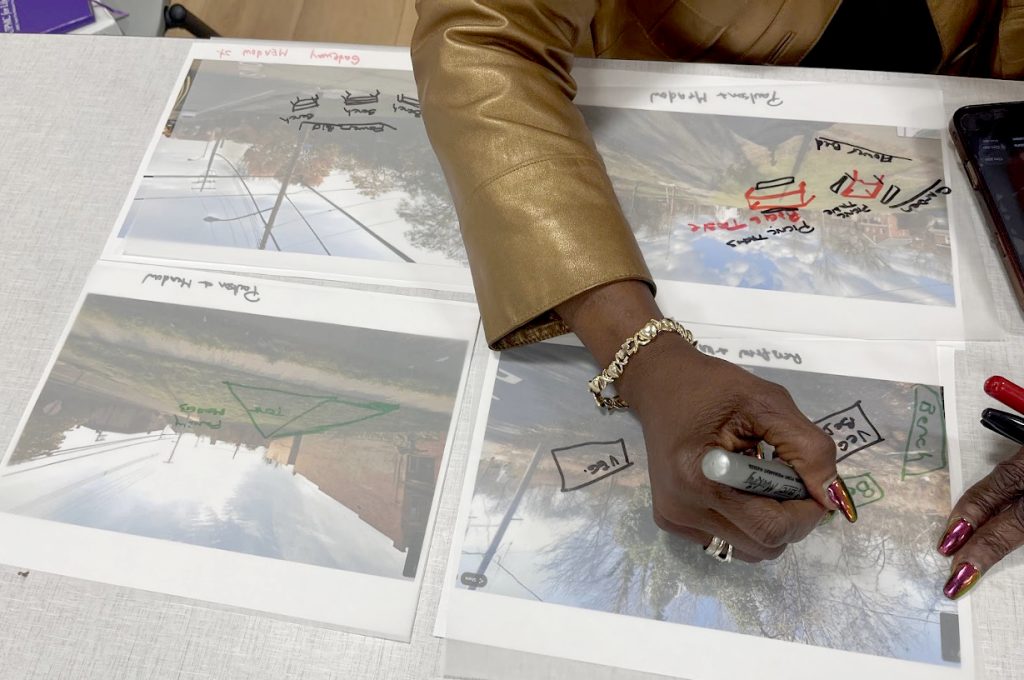
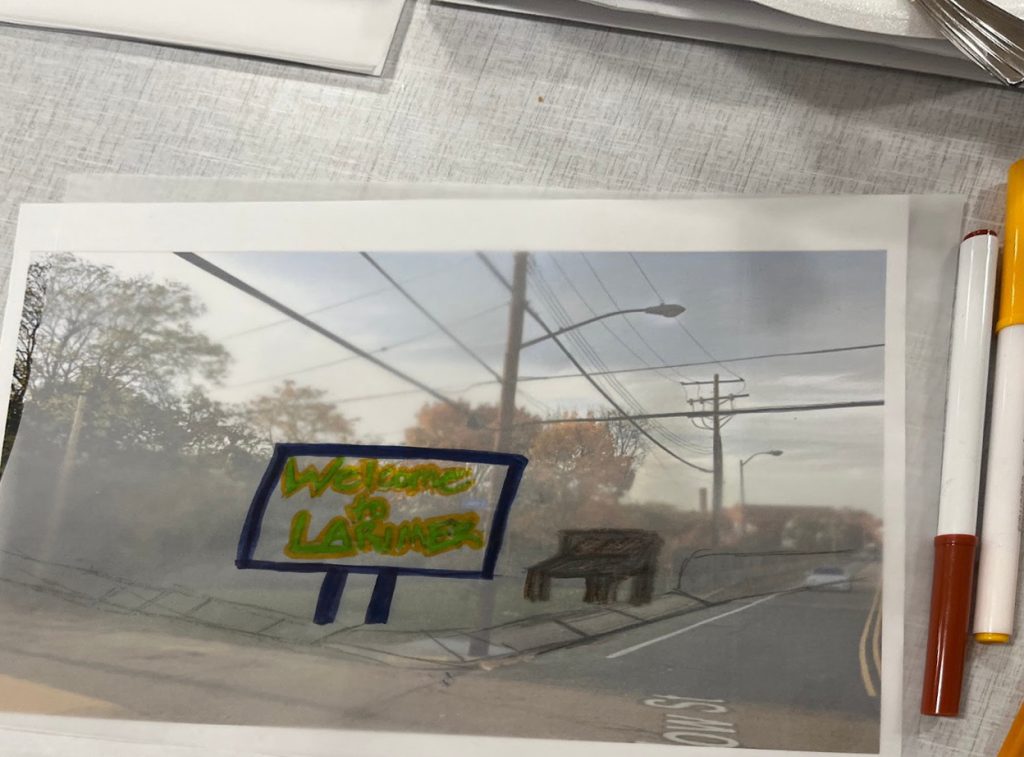
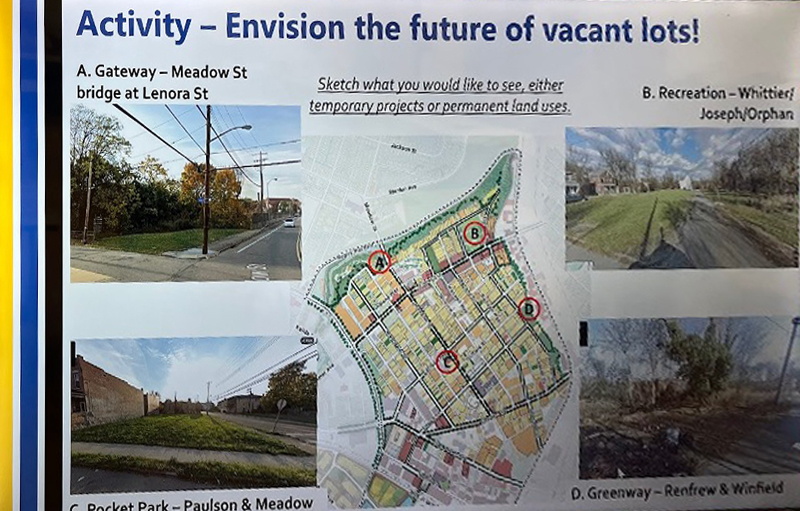
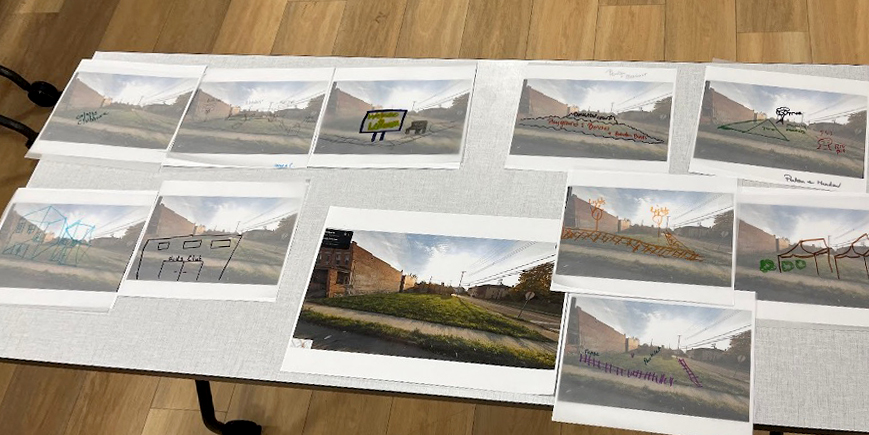
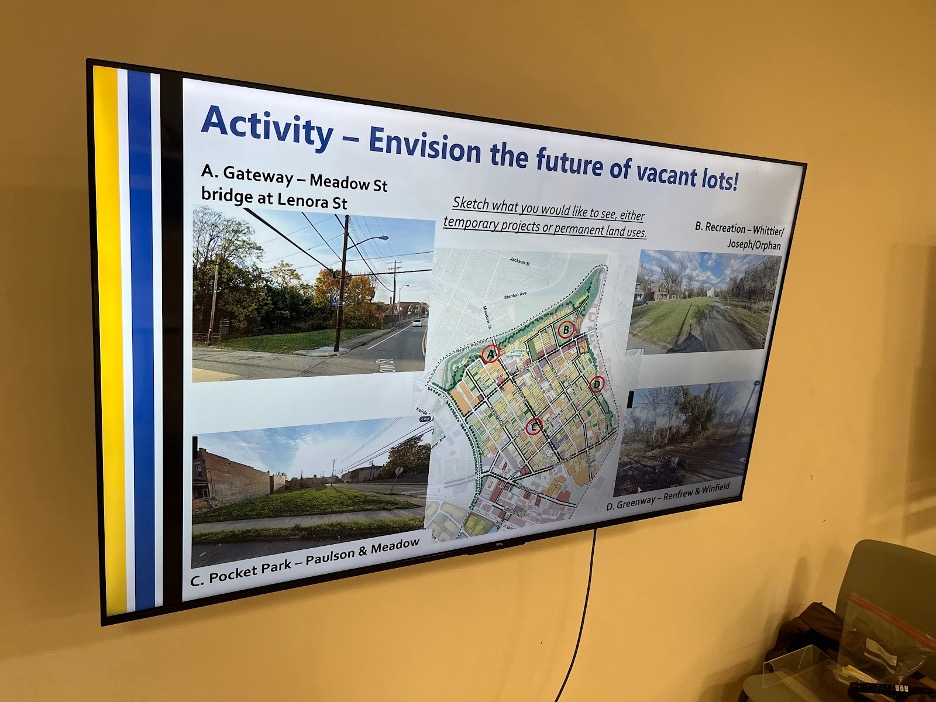
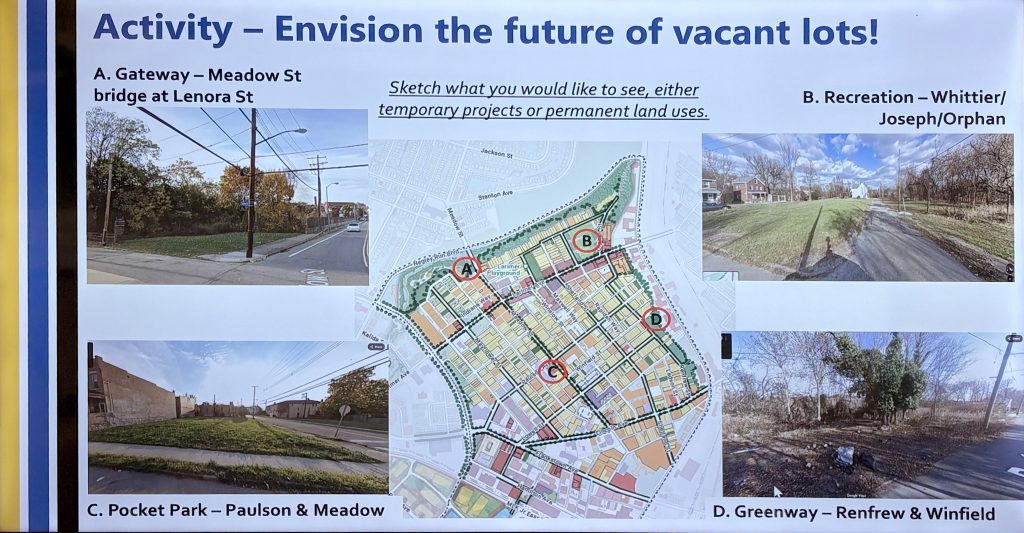
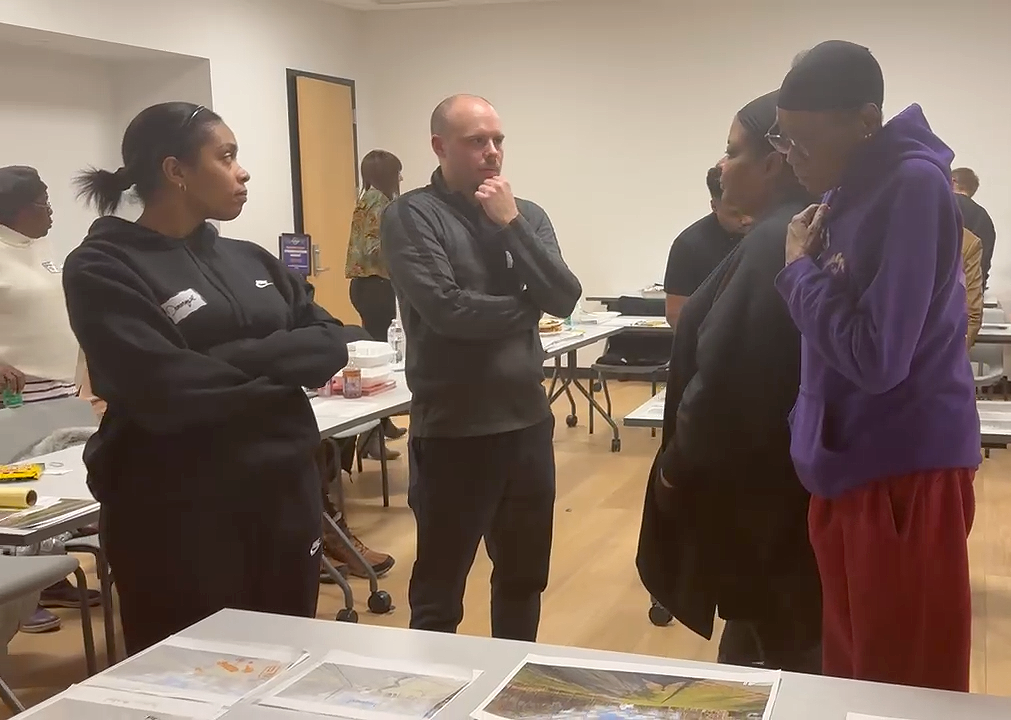
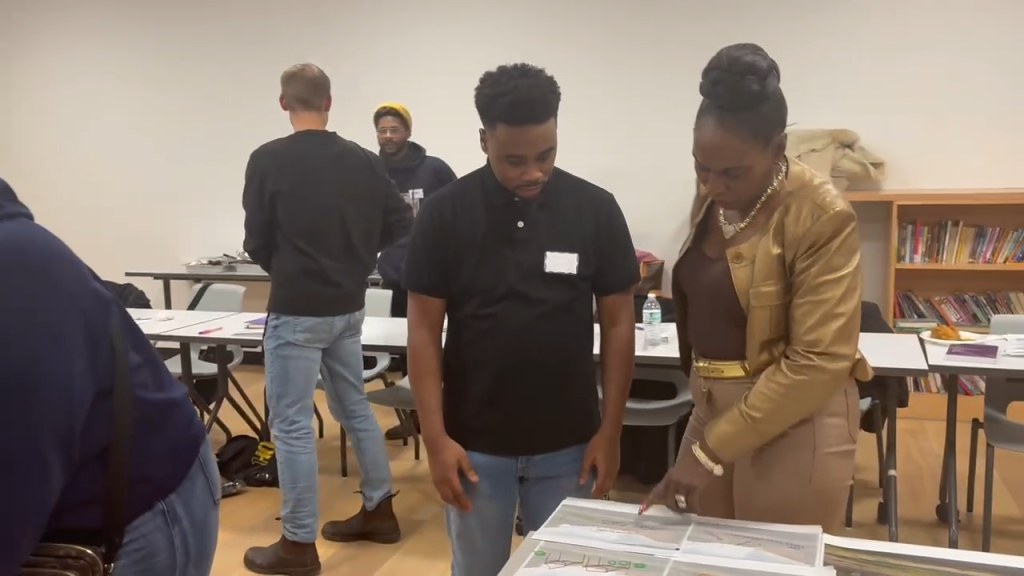
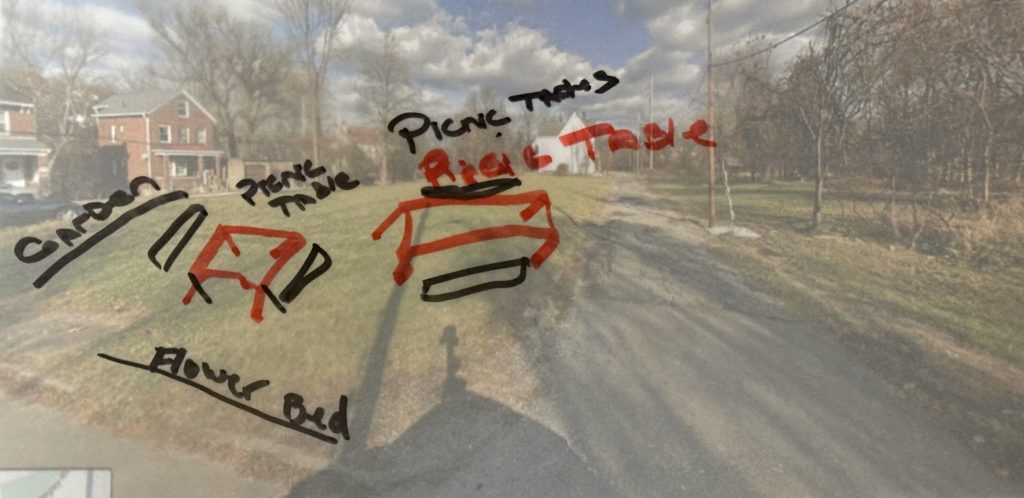
The meeting closed with a creative activity, where participants were invited to sketch what they wanted to see on several vacant lots around the neighborhood using tracing paper and markers.
They then looked at what each other had envisioned in a gallery walk activity before bundling up to brave the snow and cold on the way home.
Learn more and get involved with Pittsburgh’s Adopt-A-Lot program